Reverse Engineering Intuition
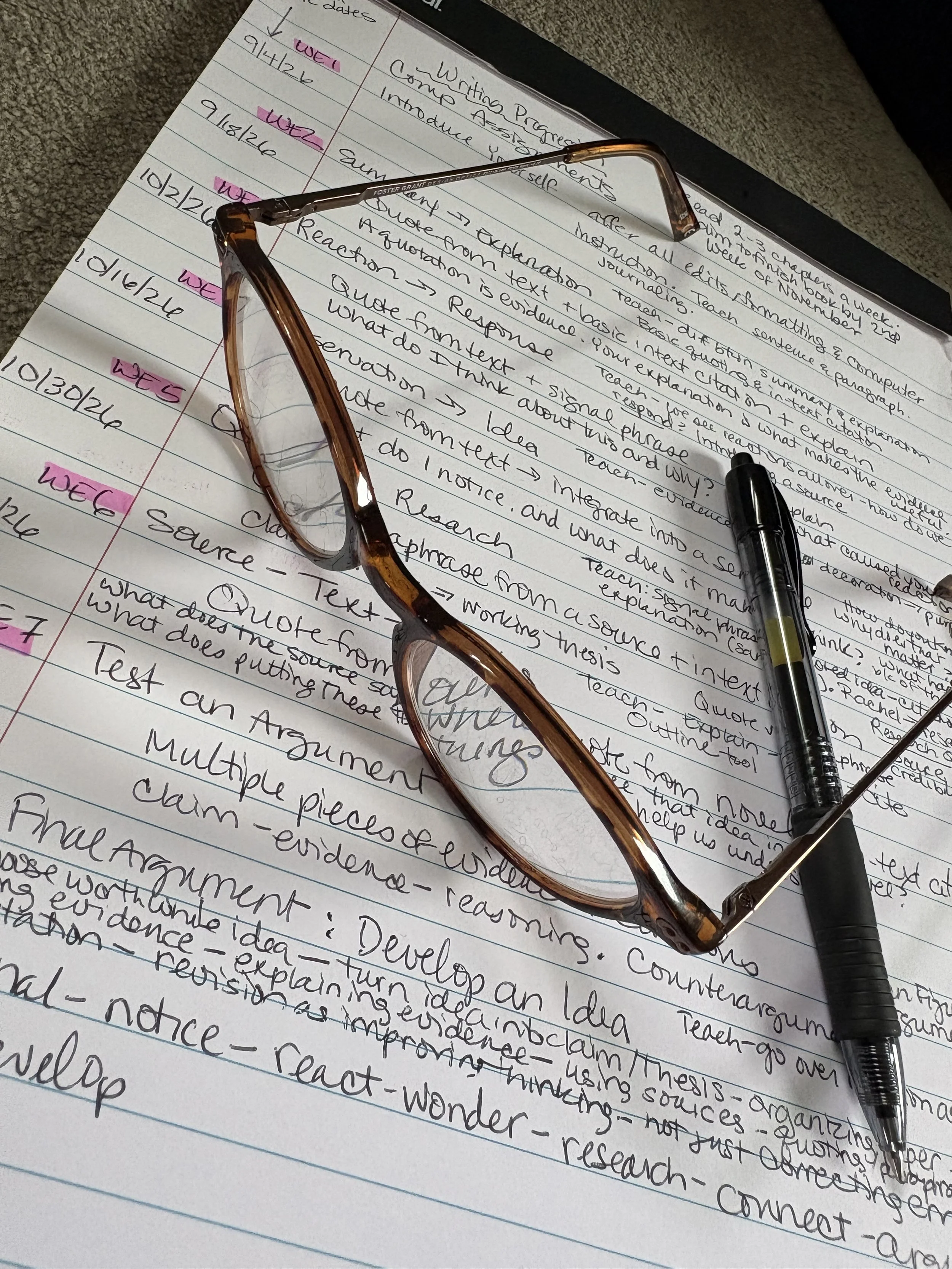
Sometimes the hardest thing to teach is what you've always done without thinking.
I have felt a serious case of imposter syndrome since writing my textbook, The Write Road. Why? I teach it every semester. I’ve taught it for ten years. Why do I feel like an imposter?
Writing has always come naturally to me. I’ve never needed to have someone explain what a good sentence looked like, why I start a new paragraph here, or how to stay in first-person point of view and make sure my verbs agree. It has all just been in my head somehow. Or maybe I have had those explanations—but they clicked right away. I didn’t have to labor over them.
I read constantly as a kid. Maybe I absorbed thousands of examples before I ever thought about the rules. I don’t really know. I just know that writing became instinct.
When I started teaching, though, I saw the same issues over and over again. I can literally give you a list of the most common problems I see in student writing. Every semester I tried new strategies to help my students become stronger writers. When something didn’t work, I backed up another step. Then another. Then another. Today, I begin with a simple question: What makes a good sentence?
Then, when I wrote the textbook, I realized something. I had to reverse-engineer what I know intuitively so I could teach it effectively. I have been feeling like an imposter because I go to teach a section from my own textbook, and I have to study and prepare myself. I have to make sure I understand why I’m doing what I’m doing. The cognitive dissonance was intense.
Until I realized the reverse-engineering thing.
I’ve never had to think consciously about writing. But some people do. So how can I help them do what comes naturally to me?
I have to slow it down. I have to stop every automatic decision and ask myself why I made it. Why does this paragraph work? Why is this explanation stronger than a summary? Why does this quote belong here? Why does this sentence feel awkward? I’m taking years of instinct (and glomming on to instruction easily) and unpacking them into steps someone else can actually learn.
So, I study. For now. Until every step of teaching writing becomes as natural to me as writing itself has always been.
I say this to myself: I am not an imposter. I am someone who took something that had become instinct and patiently (and sometimes not-so-patiently!) broke it back down into teachable pieces. Good writers often write by intuition. Good teachers learn to translate intuition into instruction.
Can I say that magic sentence again? Good teachers learn to translate intuition into instruction.
That’s the work I’m doing now.
I’m not pretending to know how to teach writing. I’m doing the difficult work of understanding my own expertise well enough to teach it responsibly.
Gosh that feels good to name!

I just finished my textbook, The Write Road: Your Journey to College Writing. I just filmed my last video, encouraging my students to stay brave, ask questions, read widely, and write. I felt like I was standing at the car as they drove off to college…don’t forget to write! Don’t give your judgement away just because someone looks or sounds smart! Credibility is earned!
And I guess, I sort of am. I gave them what I have to give: from the beginning foundations, step by step.
As I was writing my final bullet-point script, I realized this is a lot like the poem I wrote in graduate school. I’ve been wrestling with this for a long time: what is courage? What does it look like? How does it play out in our lives? What does it ask of us?
And I’m realizing that I wrote The Write Road not just to teach them to write a paper, but to learn to engage. And engaging— with this culture right now especially— can be scary and intimidating.
It takes courage.
So I thought I’d share my poem here, with you.
Courage
I have a friend who always says
it takes great courage to live in these days.
and I used to think he meant, you know, carry a gun in your purse—
teach your daughters judo
get a big dog with sharp teeth—
there are monsters out there.
walking dead looking to devour the living
and propagate their species
so eventually
we can all be walking dead
but now I’m not so sure anymore.
Maybe it takes great courage to live in these days
is speaking more about my
heart.
left untended, it likes to grow cold
wary
caustic
armored
Maybe it means that moment
when I stand between the one who sees me
as enemy
and the one who sees me
as friend I
can reach out and grab each hand
Or this: it takes great courage to face my fears
you know the ones that lurk so deep
that you feel their rumble
anytime they get close to your conscious mind
those.
fears.
and then, it takes great courage
to deal with them ugly critters
pardon whomever put them there
—throw off that hundred pound backpack I’ve carried for so long—
—and move on.
even if it means pardoning myself
for being young and really really stupid
it takes great courage to not run not hide
in my inner armored barracks
or my outer ones
and face the walking dead and
refuse
to become
one of them
all creation groans
I feel it in the water
I feel it in the earth
I smell it in the air
this is not a myth--
all creation groans
waiting for the sons of men to be revealed
because it takes
great courage to live in these days